
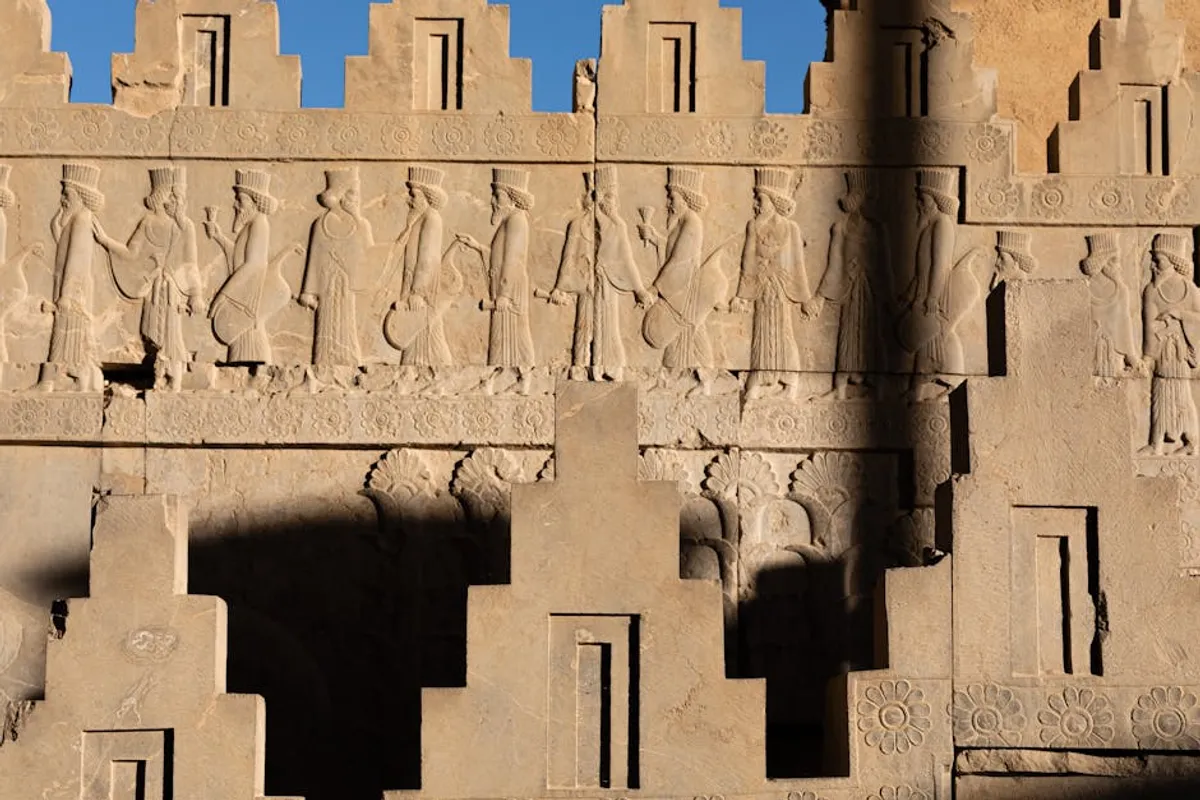
For content strategists, marketers, and publishers, understanding foundational historical narratives offers a distinct competitive advantage. Ancient Persia, often simplified or overlooked, provides a rich, untapped reservoir of themes, cultural insights, and compelling stories. This guide demystifies its core elements, offering a framework to leverage this depth for authoritative content, targeted audience engagement, and unique branding opportunities. Grasping the scope and impact of this civilization allows for the development of highly specific, high-value content that resonates with niche audiences seeking genuine historical context.
The Geographic and Chronological Scope of Ancient Persia
Defining "Ancient Persia"
The term "Ancient Persia" primarily refers to the succession of empires that ruled the Iranian plateau and beyond, beginning with the Achaemenid Empire (c. 550–330 BCE). While earlier civilizations like the Elamites and Medes laid foundational cultural and political groundwork, the Achaemenids established the first true Persian empire, characterized by its vast scale and sophisticated administration. Subsequent significant Persian empires include the Parthian (c. 247 BCE–224 CE) and Sasanian (224–651 CE) dynasties, each contributing distinct layers to the region's historical and cultural tapestry. Geographically, these empires, particularly the Achaemenid, stretched from the Balkans and Egypt in the west to Central Asia and the Indus Valley in the east, making it one of the largest empires of the ancient world.
Key Dynasties and Their Contributions
The Achaemenid Empire is often the initial focus when discussing Ancient Persia due to its foundational role and extensive documentation. Founded by Cyrus the Great, it was consolidated under Darius I, who implemented a highly effective administrative system of satrapies (provinces) governed by appointed satraps. Darius also initiated monumental building projects like Persepolis and developed the Royal Road, facilitating rapid communication and trade. His successor, Xerxes I, is notable for his campaigns against Greece. The Achaemenids were known for their policy of religious and cultural tolerance, allowing conquered peoples to retain their customs and beliefs, a strategy that fostered stability across a diverse empire. The empire's legacy is visible in its monumental building projects like Persepolis, showcasing advanced engineering and artistic skill.
Following Alexander the Great's conquest, the region saw Hellenistic rule before the rise of the Parthian Empire. The Parthians, an Arsacid dynasty, were formidable horse archers who successfully resisted Roman expansion for centuries, establishing themselves as a major power along the Silk Road trade routes. Their decentralized feudal structure contrasted with Achaemenid centralization. The Sasanian Empire then emerged, reviving many Achaemenid traditions and fostering a golden age of Persian culture. They established Zoroastrianism as the state religion, developed sophisticated legal and administrative systems, and engaged in prolonged conflicts with the Byzantine Empire, leaving a profound impact on art, architecture, and intellectual thought.
Core Pillars of Persian Society and Governance
Centralized Administration and Imperial Organization
The Achaemenid Empire's success lay significantly in its administrative innovations. The empire was divided into approximately twenty satrapies, each with a governor, military commander, and royal secretary reporting directly to the king. This separation of powers prevented any single official from accumulating too much authority. A sophisticated postal system, utilizing the Royal Road, ensured swift communication across the vast territories. Taxation was systematic, based on the economic capacity of each satrapy, providing a stable revenue stream for the imperial court and military. This highly organized structure allowed for effective governance and resource management over a multi-ethnic population.
Religion and Philosophy
Zoroastrianism, an ancient monotheistic religion, played a pivotal role in shaping Persian ethics and worldview, particularly under the Sasanians. Founded by the prophet Zoroaster, it posits a cosmic struggle between Asha (truth, order) and Druj (falsehood, disorder), personified by Ahura Mazda (Wise Lord) and Angra Mainyu (Evil Spirit). Human beings are called to choose between these forces through good thoughts, words, and deeds. Key tenets include dualism, free will, and an emphasis on ethical conduct, justice, and environmental stewardship. Its influence on Abrahamic religions, particularly in concepts of heaven, hell, angels, and a final judgment, is a significant area of academic study.
Art, Architecture, and Engineering
Persian art and architecture are characterized by grandeur, symbolic richness, and a synthesis of diverse cultural influences. Sites like Persepolis and Pasargadae showcase monumental palaces, intricate reliefs depicting various peoples of the empire, and sophisticated urban planning. These structures were not merely functional but served as powerful statements of imperial authority and cultural unity. Engineering feats included the construction of qanats, underground aqueducts that efficiently transported water over long distances in arid regions, demonstrating advanced hydrological knowledge. The Royal Road itself was a marvel of infrastructure, spanning over 2,500 kilometers and facilitating trade, military movement, and imperial communication.
Lasting Legacies and Modern Relevance
Influence on Western Civilization and Beyond
Ancient Persia's impact extends far beyond its geographical borders. The Achaemenid concept of a vast, multicultural empire governed by a centralized, tolerant administration influenced subsequent imperial models. The Cyrus Cylinder, often cited as an early declaration of human rights, reflects a policy of respecting conquered peoples' cultures and religions. Persian art, literature, and philosophical ideas traveled along trade routes, influencing Greek philosophy, Roman governance, and later Islamic civilization. The Sasanian period, in particular, saw significant advancements in science, medicine, and mathematics, which were later transmitted to the wider world through Arab scholarship.
Content Opportunities and Niche Authority
Pro Tip: Leveraging historical depth like that of Ancient Persia allows for the creation of evergreen content that establishes deep niche authority. Rather than rehashing common topics, explore unique angles such as ancient leadership principles, engineering innovations, or cross-cultural influences to capture targeted search intent and differentiate your content. This approach builds a specialized audience and positions your platform as a definitive resource.
Understanding Ancient Persia opens avenues for diverse content creation. For example, a travel content creator could focus on historical sites and their modern interpretations. A business content creator might analyze ancient Persian leadership strategies or administrative models for contemporary application. Cultural marketers can draw inspiration from Persian art, mythology, and philosophical concepts for branding narratives. The richness of this history provides a foundation for:
- Historical travel guides and itineraries focused on Iran and neighboring regions.
- Deep dives into ancient technologies, such as qanats or early postal systems.
- Comparative studies of ancient empires and their governance structures.
- Explorations of Zoroastrianism's influence on global religious thought.
- Analysis of ancient Persian art, architecture, and their symbolic meanings.
- Biographies and leadership lessons from figures like Cyrus the Great or Darius I.
Leveraging Historical Depth for Content Strategy
Integrating the narrative of Ancient Persia into your content strategy moves beyond superficial historical references. It involves creating well-researched, authoritative pieces that provide genuine educational value to your audience. This approach not only enhances your site's credibility but also allows you to target specific, less-saturated long-tail keywords related to ancient history, cultural studies, or comparative civilization. By offering detailed explanations and unique perspectives, you can attract an audience genuinely interested in depth, fostering higher engagement rates and establishing your platform as a go-to resource for specialized historical knowledge. This nuanced content can serve as foundational pillar content, supporting broader themes and attracting organic traffic seeking expert insights.
Frequently Asked Questions about Ancient Persia
What was the primary religion of Ancient Persia?
While diverse beliefs existed, Zoroastrianism became the state religion, particularly under the Sasanian Empire, profoundly influencing Persian culture and ethics.
Who was Cyrus the Great?
Cyrus the Great was the founder of the Achaemenid Empire, known for his military conquests, administrative prowess, and policies of religious and cultural tolerance towards conquered peoples.
What were the major achievements of the Achaemenid Empire?
Key achievements include establishing a vast, multicultural empire with a centralized administration, constructing the Royal Road, building monumental cities like Persepolis, and fostering religious tolerance.
How did Ancient Persia influence the world?
Ancient Persia influenced the world through its imperial administrative models, early concepts of human rights, architectural and engineering innovations, philosophical and religious ideas (especially Zoroastrianism), and its role as a cultural conduit along the Silk Road.