Nowruz, the ancient Persian New Year, marks the vernal equinox and the astronomical beginning of spring. Observed for over 3,000 years, it is a celebration deeply rooted in Zoroastrian traditions, symbolizing rebirth, renewal, and the triumph of good over evil. Far more than a simple holiday, Nowruz is a 13-day period of cultural significance, family gatherings, and community festivities, recognized by UNESCO as an Intangible Cultural Heritage of Humanity. For 2026, understanding its precise date, the rich tapestry of its traditions, and practical celebration ideas is essential for anyone seeking to engage with this globally observed event, whether for personal observance, cultural education, or community planning.
Pinpointing Nowruz 2026: The Astronomical Event
The exact moment of Nowruz is determined by the vernal equinox, known as Saal Tahvil, which is the precise instant the sun crosses the celestial equator and equalizes day and night. This astronomical event is calculated annually for the Northern Hemisphere. For 2026, Nowruz is anticipated to occur on Saturday, March 20th. The precise time of the equinox will vary based on geographical location and time zone. For instance, in Tehran, Iran, the equinox is expected in the early morning hours, while for communities in North America, it will fall on the afternoon or evening of March 19th, due to time differences. Accurate local time calculation is critical for observers and event planners to align celebrations with the exact moment of transition.
The Vernal Equinox and Its Calculation
The calculation of Saal Tahvil relies on sophisticated astronomical computations, often performed by national observatories or astronomical societies. These calculations ensure that the New Year begins at the precise celestial moment, reflecting the deep connection between the Nowruz tradition and natural cycles. This precision underscores the scientific grounding of a celebration often perceived as purely cultural, providing a consistent, universally understood marker for the start of spring.
Core Traditions of Nowruz: A Cultural Tapestry
Nowruz traditions are diverse, evolving over millennia and adapting across various cultures that observe it, from Iran and Afghanistan to parts of Central Asia, the Caucasus, and the Balkans. Despite regional variations, several core practices remain central to the celebration's spirit of renewal and togetherness. Exploring these customs can offer a deeper appreciation for Persian food traditions and their meanings, enriching the celebration.
Haft-Seen: The Seven 'S's of Renewal
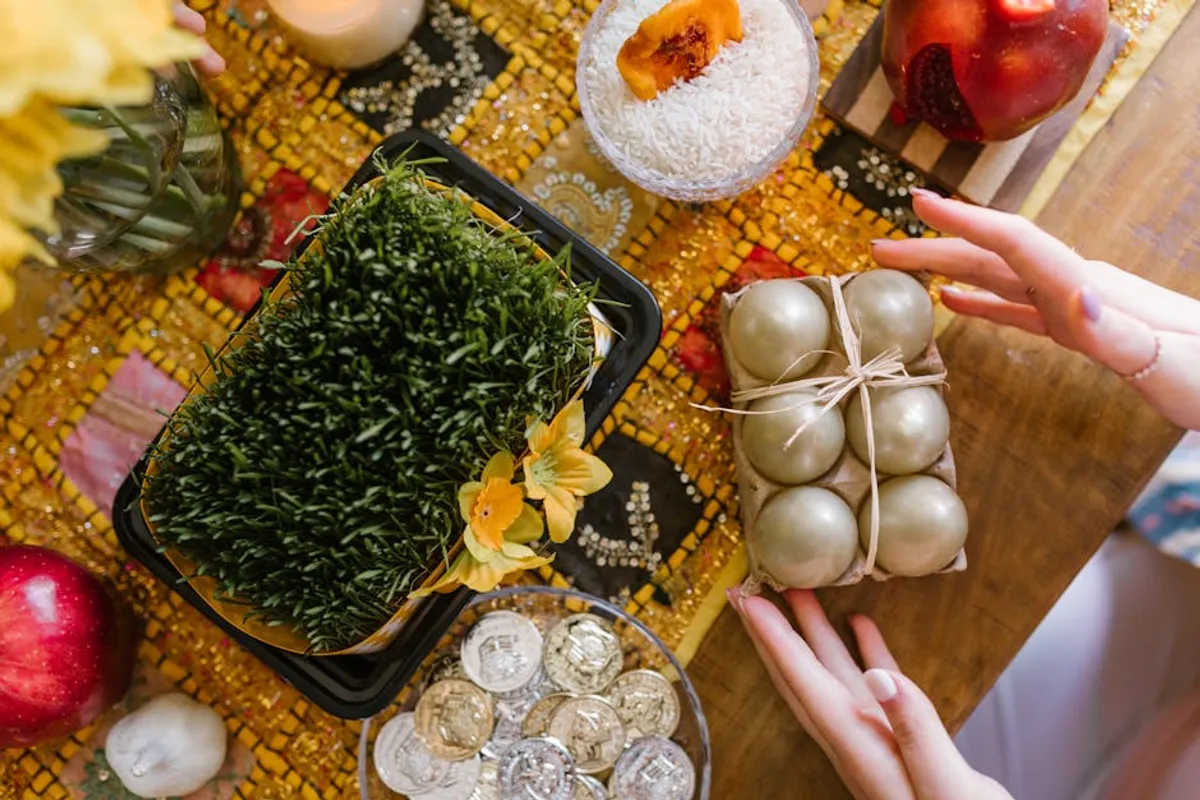
Central to Nowruz is the arrangement of the Haft-Seen (literally "Seven S's"), a ceremonial table display featuring seven symbolic items starting with the Persian letter 'S'. Each item represents a concept vital to life and renewal:
- Sabzeh: Wheat, barley, lentil, or other sprouts grown in a dish, symbolizing rebirth and growth.
- Samanoo: A sweet pudding made from wheat germ, representing affluence and fertility.
- Senjed: Dried oleaster fruit, symbolizing love and affection.
- Seer: Garlic, representing medicine and health.
- Seeb: Apple, symbolizing beauty and health.
- Sumac: Sumac berries, symbolizing the sunrise and the spice of life.
- Serkeh: Vinegar, symbolizing age, patience, and wisdom.
Additional items often included are a mirror (reflection, self-knowledge), candles (enlightenment), colored eggs (fertility), a bowl of water with goldfish (life, movement), coins (prosperity), hyacinths (fragrance, beauty), and a holy book or a book of poetry (such as Hafez or Shahnameh) for wisdom and inspiration.
Chaharshanbe Suri: Fire, Purification, and Festivity
Held on the last Tuesday evening before Nowruz, Chaharshanbe Suri, or "Red Wednesday," is a purification ritual. People gather to light bonfires and leap over them, chanting "Zardi-ye man az to, sorkhi-ye to az man" ("My yellow (illness) to you, your red (health) to me"). This act is believed to cleanse away illness and misfortune from the past year, ushering in health and vitality for the new one. The evening is also marked by fireworks, music, and traditional treats like ajeel-e moshkel-gosha (a mix of nuts and dried fruits).
Sizdah Be-dar: Nature's Embrace and Community
The 13th day of Nowruz, known as Sizdah Be-dar ("Thirteen Outdoors"), marks the end of the holiday period. Families and friends traditionally spend the day outdoors, picnicking in parks, fields, or by rivers. The sabzeh from the Haft-Seen is typically thrown into flowing water, symbolizing the return of growth to nature and the casting away of negativity. This day emphasizes community, joy, and a deep connection to the natural world.
Eid Didani: Visiting and Reconnecting
Throughout the Nowruz period, particularly in the first few days, it is customary for families and friends to visit each other's homes, a tradition known as Eid Didani. Younger members typically visit elders first. These visits are opportunities to strengthen familial bonds, exchange greetings, and share sweets and refreshments. This social aspect reinforces community ties and mutual respect.
Engaging with Nowruz: Celebration Ideas for 2026
For organizations, communities, and individuals, Nowruz 2026 presents a significant opportunity for cultural engagement, education, and celebration. Thoughtful planning can create impactful experiences that resonate with diverse audiences.
Community Events and Public Engagements
Cultural centers, museums, and community organizations can host public Nowruz celebrations. This might include setting up a communal Haft-Seen display, organizing traditional music and dance performances, or hosting workshops on Nowruz crafts and culinary traditions. Public fire-jumping events for Chaharshanbe Suri, with safety precautions, can also draw significant community participation. These events foster inclusivity and provide a platform for cultural exchange.
Educational Initiatives and Cultural Exchange
Educational institutions can integrate Nowruz into their curricula, exploring its history, symbolism, and global reach. This could involve classroom presentations, art projects centered on Haft-Seen items, or inviting community members to share their traditions. Online platforms can host virtual tours of Haft-Seen tables or share documentaries on Nowruz customs, reaching a broader, geographically dispersed audience.
Culinary Celebrations: Flavors of Spring
Food plays a central role in Nowruz. Restaurants can offer special Nowruz menus featuring traditional dishes like Sabzi Polo ba Mahi (herbed rice with fish), Ash-e Reshteh (noodle soup), and various sweets. Cooking classes focused on Nowruz recipes can be popular, allowing participants to learn about the cultural significance of the ingredients and preparation methods. Home cooks can plan elaborate family meals, incorporating fresh, seasonal ingredients.
Digital Content and Global Outreach
The digital realm offers extensive opportunities for Nowruz engagement. Content creators can produce videos explaining the Haft-Seen, blog posts detailing regional traditions, or social media campaigns using relevant hashtags to share personal stories and celebration photos. Virtual concerts, online storytelling sessions, and interactive educational resources can connect people globally, transcending geographical barriers and making Nowruz accessible to an international audience.
Pro Tip: When planning Nowruz events or content, prioritize authenticity and cultural sensitivity. Collaborate with community leaders, cultural experts, or individuals from observing cultures to ensure accurate representation and respectful engagement. Avoid tokenism; instead, aim for deep, meaningful inclusion that honors the traditions' rich heritage.
Planning Your Nowruz 2026 Engagement
Nowruz 2026 offers a potent moment for connection, reflection, and celebration. Its emphasis on renewal, family, and nature provides a universal message that resonates across diverse backgrounds. By understanding the astronomical date, respecting the depth of its traditions, and creatively planning engagement activities, individuals and organizations can contribute to a vibrant and meaningful observance. Early planning, attention to cultural nuances, and a genuine desire for shared experience will ensure that any Nowruz initiative is both successful and enriching.
Frequently Asked Questions About Nowruz
What does Nowruz mean?
Nowruz literally means "New Day" in Persian, symbolizing the start of a new year and the renewal of nature.
Which countries celebrate Nowruz?
Nowruz is celebrated in Iran, Afghanistan, Tajikistan, Uzbekistan, Azerbaijan, Kyrgyzstan, Kazakhstan, Turkmenistan, and by various communities in Iraq, Turkey, Pakistan, India, China, and the diaspora worldwide.
Is Nowruz a religious holiday?
While Nowruz has ancient Zoroastrian roots, it is widely observed as a secular cultural holiday by people of various faiths and backgrounds, celebrating spring and renewal.
How long do Nowruz celebrations last?
The official Nowruz holiday period typically lasts 13 days, beginning on the vernal equinox and culminating with Sizdah Be-dar, the day spent outdoors.