
Understanding Iranian history requires a structured approach, especially for students navigating centuries of complex political shifts, cultural developments, and geopolitical influences. A well-organized timeline serves as an essential framework, transforming a dense subject into an accessible narrative. This resource aims to provide that clarity, breaking down Iran's rich past into manageable periods and highlighting pivotal moments, dynasties, and figures. For educators and content strategists, providing such a foundational, chronologically ordered resource addresses a clear informational intent, serving as a high-value asset for academic engagement and broader historical literacy.
Ancient Persia: Foundations of an Empire (c. 3200 BCE – 651 CE)
The earliest documented history of Iran, or Persia as it was known to the West, begins with the Elamite civilization in the southwest, laying groundwork for later empires. This era is characterized by the emergence of powerful, centralized states that profoundly shaped the region's cultural and political landscape.
Elamite Civilization (c. 3200 – 539 BCE)
Centered in Khuzestan, Elam was one of the world's oldest civilizations, predating the Achaemenids by millennia. Its interactions, often conflictual, with Mesopotamian powers like Sumer and Akkad, are crucial for understanding early regional dynamics. Key cities included Susa, a major administrative and economic hub. The Elamites developed their own writing system and distinctive art forms, influencing subsequent Iranian cultures.
Achaemenid Empire (550 – 330 BCE)
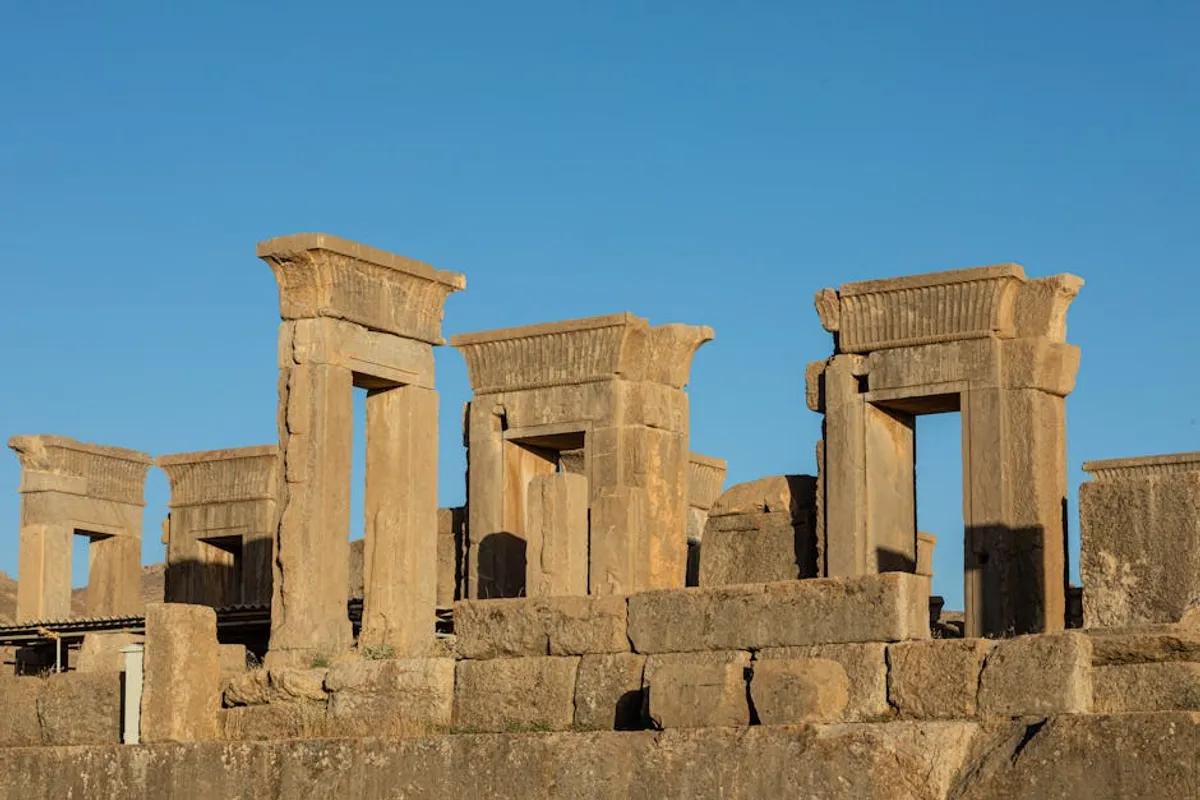
Founded by Cyrus the Great, the Achaemenid Empire became the largest empire of the ancient world, stretching from the Balkans to the Indus Valley. Its administrative innovations, including a satrapy system and the Royal Road, facilitated governance across vast territories. Darius I further consolidated the empire, building Persepolis as a ceremonial capital. This period is renowned for its religious tolerance (exemplified by Cyrus's Cylinder), monumental architecture, and sophisticated infrastructure. The empire's eventual fall to Alexander the Great marked a significant turning point in global history.
Seleucid and Parthian Empires (312 BCE – 224 CE)
Following Alexander's death, his generals carved up his empire, with Seleucus I Nicator establishing the Seleucid Empire in Persia. This Hellenistic period introduced Greek culture and administration but faced continuous resistance. The Parthians, an Iranian people from the northeast, gradually asserted control, establishing a formidable empire that became Rome's primary rival in the East. The Parthians were master horsemen and archers, known for their decentralized feudal system and unique blend of Iranian and Hellenistic cultural elements.
Sasanian Empire (224 – 651 CE)
The Sasanian Empire represented a resurgence of native Iranian rule and culture, often considered a golden age of ancient Persia. They established Zoroastrianism as the state religion and engaged in prolonged, costly wars with the Byzantine Empire. Sasanian art, architecture, and administrative structures heavily influenced later Islamic civilizations. Their sophisticated legal system, advanced agriculture, and rich intellectual life underscore their lasting impact. The empire's decline was hastened by internal strife and the devastating wars with Byzantium, leaving it vulnerable to the rising Islamic forces.
Islamic Conquest and Early Dynasties (651 – 1258 CE)
The Arab-Islamic conquest fundamentally transformed Iran, leading to the adoption of Islam and the integration into the broader Islamic caliphate. While politically subsumed, Iranian culture and administrative traditions significantly influenced the new Islamic empire.
Umayyad and Abbasid Rule (651 – 861 CE)
After the fall of the Sasanians, Iran became part of the Umayyad and then the Abbasid Caliphates. During the Abbasid period, particularly from the 9th century, Iranian scholars, scientists, and artists played a crucial role in the Islamic Golden Age. Cities like Baghdad, heavily influenced by Sasanian urban planning, became centers of learning. However, local Iranian dynasties began to emerge, challenging central Abbasid authority.
Emergence of Iranian Dynasties
Several semi-independent or independent Iranian dynasties rose, demonstrating a strong desire for local autonomy and the preservation of Persian culture:
- Samanids (819 – 999 CE): Centered in Transoxiana and Khorasan, they were patrons of Persian literature, fostering the revival of the Persian language and the epic poetry of Ferdowsi.
- Buyids (934 – 1062 CE): A Daylamite dynasty that ruled much of central and western Iran, and even Baghdad, effectively controlling the Abbasid Caliph. They promoted Shi'ism and Persian culture.
- Ghaznavids (977 – 1186 CE): Of Turkic origin, they established a powerful empire from Ghazni, Afghanistan, extending into northern India. They were patrons of Persian arts and literature, despite their Turkic roots.
Pro Tip: When studying this period, recognize that while Islam became the dominant religion, Persian language and cultural identity persisted and even flourished, often through the patronage of these regional dynasties. This demonstrates the resilience and adaptability of Iranian culture, which absorbed foreign influences while maintaining its distinct character.
Turkic and Mongol Dominance (1037 – 1501 CE)
This era saw successive waves of Turkic and Mongol invasions, leading to significant demographic and political changes, but also new cultural syntheses.
Seljuk Empire (1037 – 1194 CE)
The Seljuks, a Turkic dynasty, established a vast empire that included Iran, Mesopotamia, and Anatolia. They were Sunni Muslims and instrumental in promoting madrasas (religious schools). Their rule marked a period of stability and cultural flourishing, particularly in architecture and science. Notable figures like Omar Khayyam lived during this time.
Mongol Ilkhanate (1256 – 1335 CE)
The Mongol invasion led by Genghis Khan and his grandson Hulegu resulted in widespread destruction, particularly the Sack of Baghdad in 1258. The Ilkhanate, a branch of the Mongol Empire, ruled Iran for nearly a century. Despite the initial devastation, the Ilkhans eventually converted to Islam and became patrons of art and science, leading to a unique blend of Mongol, Persian, and Islamic artistic styles.
Timurid Empire (1370 – 1507 CE)
Timur (Tamerlane), a Turko-Mongol conqueror, established a vast but short-lived empire that briefly reunited much of Iran and Central Asia. His capital, Samarkand, became a center of Islamic art and architecture. The Timurid period is renowned for its cultural and scientific achievements, particularly in miniature painting and astronomy.
Early Modern Iran: Safavids to Qajars (1501 – 1925 CE)
This period saw the rise of powerful native Iranian dynasties that shaped modern Iranian identity and its geopolitical standing.
Safavid Dynasty (1501 – 1736 CE)
The Safavids established Twelver Shi'ism as the official state religion of Iran, a defining moment that differentiated Iran from its Sunni neighbors. This religious shift had profound and lasting impacts on Iranian identity. Shah Abbas I (1588-1629) is considered the greatest Safavid ruler, moving the capital to Isfahan and fostering a golden age of art, architecture, and commerce. The Safavids engaged in frequent conflicts with the Ottoman Empire over territorial and religious differences.
Afsharid and Zand Dynasties (1736 – 1794 CE)
Following the decline of the Safavids, Nader Shah Afshar briefly restored Iran's military might, expanding its borders and even invading India. After his assassination, the Zand dynasty, under Karim Khan Zand, brought a period of relative peace and prosperity, centered in Shiraz.
Qajar Dynasty (1785 – 1925 CE)
The Qajars established Tehran as their capital. This era was marked by increasing foreign intervention, particularly from Russia and Britain, leading to territorial losses and economic concessions. Internal discontent grew, culminating in the Constitutional Revolution of 1906, which sought to establish a parliamentary monarchy and limit the Shah's power. Despite these reforms, the Qajar dynasty struggled to modernize and maintain independence.
Modern Iran: Pahlavis and the Islamic Republic (1925 CE – Present)
The 20th century brought dramatic transformations, including modernization efforts, a revolution, and the establishment of a new political order.
Pahlavi Dynasty (1925 – 1979 CE)
Reza Shah Pahlavi, an army officer, overthrew the Qajars and established a new dynasty. He initiated ambitious modernization and secularization programs, including judicial reform, women's suffrage, and industrial development. His son, Mohammad Reza Pahlavi, continued these efforts, but his autocratic rule, ties to Western powers, and suppression of dissent led to widespread opposition.
Islamic Revolution (1979 CE)
The Islamic Revolution, led by Ayatollah Ruhollah Khomeini, overthrew the Pahlavi monarchy and established the Islamic Republic of Iran. This event fundamentally reshaped Iran's political, social, and economic landscape, introducing a unique system of clerical rule and a foreign policy based on anti-imperialism.
Islamic Republic of Iran (1979 CE – Present)
Since its establishment, the Islamic Republic has faced numerous challenges, including the Iran-Iraq War (1980-1988), international sanctions, and ongoing internal debates about its future direction. Despite these pressures, Iran remains a significant regional power with a rich cultural heritage and a complex political system.
Applying Your Timeline Knowledge
A chronological overview is just the starting point. To truly grasp Iranian history, students should actively engage with the timeline by:
- Identifying Causality: How did events in one period influence the next? For example, the Sasanian-Byzantine wars weakened both empires, facilitating the Islamic conquests.
- Tracing Themes: Observe recurring themes like the interplay between centralized power and regional autonomy, the impact of foreign invasions, or the evolution of religious identity.
- Connecting Culture and Politics: Understand how artistic, literary, and scientific achievements were often intertwined with political stability or religious patronage.
- Using Primary Sources: Supplement timeline facts with excerpts from historical texts, archaeological findings, or contemporary accounts to gain deeper insights.
This structured approach transforms a simple list of dates into a dynamic framework for critical historical analysis, enhancing comprehension and retention.
Frequently Asked Questions
Why is Iranian history often divided into "ancient" and "Islamic" periods?
This division reflects the profound impact of the 7th-century Arab-Islamic conquest, which introduced a new religion and political system. While Persian culture persisted, the shift marked a significant turning point in governance, societal structure, and religious identity, leading historians to delineate these distinct eras.
What were the most significant cultural contributions of ancient Persia?
Ancient Persia, particularly under the Achaemenids and Sasanians, contributed significantly to architecture (e.g., Persepolis, Taq-e Kasra), administrative systems (satrapy), religious thought (Zoroastrianism), and early concepts of human rights (Cyrus Cylinder). Their art and engineering also left a lasting legacy.
How did foreign invasions shape Iranian identity?
Foreign invasions, from Alexander the Great to the Mongols, often led to initial destruction but also to cultural synthesis. Iranian identity proved remarkably resilient, absorbing elements from conquerors while maintaining its core language, literary traditions, and worldview. These invasions often spurred periods of cultural revival and nationalist sentiment.
What is the role of religion in Iranian history?
Religion has played a central role throughout Iranian history, from ancient Zoroastrianism as a state religion to the establishment of Twelver Shi'ism by the Safavids. It has often been a unifying force, a source of political legitimacy, and a catalyst for social and cultural movements, profoundly influencing governance, art, and daily life.